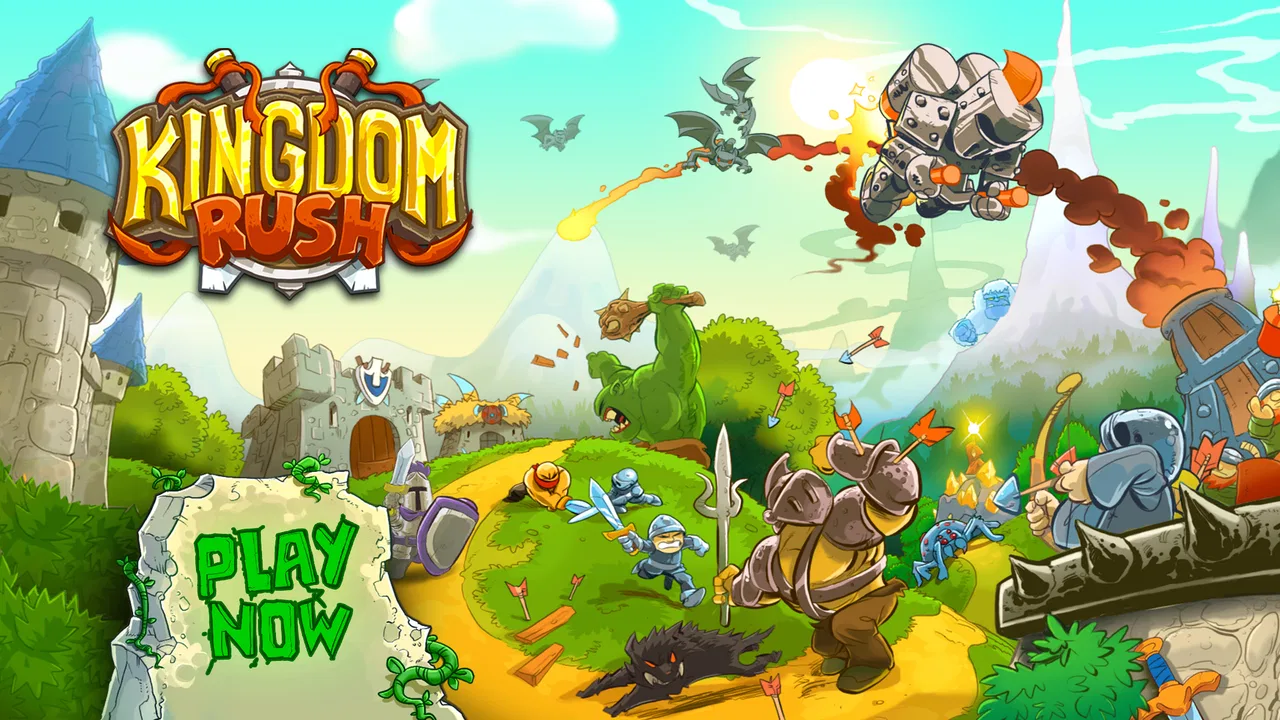
Kingdom Rush Tower Defense TD
- 4.7
- Rating
- 10.00M
- Installs
- Free
- Price

 Analysis by App-foxy
I spent time with Kingdom Rush Tower Defense TD as the kind of player who enjoys strategy games that are easy to start but difficult to master. It looks approachable at first: enemies follow paths, towers protect the kingdom, and each stage asks me to stop the incoming threat before it reaches the end. The real appeal appears after that first impression, when every placement, upgrade, and emergency decision begins to matter.
This is a free strategy game from Ironhide Games, released on May 15, 2013. It has remained remarkably visible on mobile, with over 10 million installs and a 4.7 average from around 846 thousand ratings. Those figures make sense after playing it: the presentation is friendly, the rules are readable, and the basic loop works well in short sessions. Still, its lasting value does not come simply from being a classic tower defense game. It comes from asking me to plan ahead while reacting to problems that my original plan did not fully cover.
Where the real decisions begin
The opening stages teach the fundamentals without burying me in menus. I learn where towers can be built, how different defensive roles complement one another, and why spending every available resource immediately is not always wise. That last lesson becomes important quickly. A tower placed in a convenient location may contribute less than one positioned where enemies remain exposed for longer, and an upgrade that seems attractive now can leave me unable to answer the next wave.
You May Also Like

 Blood Strike: 2.5 Anniversary
Blood Strike’s Loadouts Turn Every Drop Into a Tactical Gamble
A close look at Blood Strike’s custom loadouts: how fast access to signature weapons reshapes its battle royale rhythm, rewards preparation, and narrows the gap between fights.

 Pandora - Music & Podcasts
Pandora’s Music Is Easy to Start, but Harder to Recover
Pandora’s strength is its low-effort path from a seed to a station. Its weak spot is how much confidence it asks you to place in connection, setup, and quiet recovery.

 8 Ball Pool
 Is Built on Rivalries, Rematches, and Routine
A close look at the rivalries, rematches, shared routines, and unanswered safety questions that turn a quick pool match into a persistent mobile community.

 Samsung Music
’s Quiet Strength Is Playing What You Already Own
Its reach comes less from spectacle than from dependable access to a personal library. That simplicity is both the app’s strongest retention engine and its ceiling.

 AccuWeather: Weather Radar
AccuWeather Review: A Quick, Clear Forecast for Everyday Decisions
For everyday plans, the best forecast is the one you can understand quickly. AccuWeather makes rain timing, radar, and local conditions easy to act on, with a few trade-offs.

 Hill Climb Racing
Why Hill Climb Racing Still Turns Crashes Into One More Run
A tiny car, a bumpy hill and one more upgrade: Hill Climb Racing keeps resurfacing because its simple chaos makes every near-miss feel personal.
More From Our News Desk



I like that the game makes positioning feel meaningful without requiring a complicated interface. I am not managing a spreadsheet; I am reading the road, identifying likely pressure points, and deciding whether to strengthen an existing defense or create a new layer of protection. A bend in the path can become a valuable location because it gives several defensive options more time to work. A short route, on the other hand, can punish a slow response even when my overall setup looks strong.
The central skill is not building the most expensive tower; it is spending at the right moment. That distinction separates a comfortable victory from a desperate recovery. When I use all my resources as soon as they arrive, I may create a strong front line but lose the flexibility to respond. Holding something back feels inefficient until an unexpected group reaches a weak section and I can immediately reinforce it.
That creates a useful planning horizon. I am thinking about the current wave, the next one, and the shape of the route as a whole. A defense that survives the present but cannot handle what follows is not really successful. I often prefer a slightly less powerful arrangement that keeps several options open over a highly specialized setup that leaves one lane exposed.
Reading the battlefield instead of chasing upgrades
The most satisfying choices involve trade-offs between coverage and concentration. Concentrating defenses can make one section extremely reliable, but it may allow another part of the route to become dangerous. Spreading everything evenly feels safe, yet it can leave every position merely adequate. The better answer depends on how enemies approach and where a failure would be hardest to recover from.
I also found it useful to think in terms of jobs rather than isolated towers. One defensive position may be valuable because it slows or controls the flow of enemies, while another is better at delivering damage. A third may protect the plan when a tougher target survives longer than expected. The game becomes much clearer when I ask what each placement is supposed to accomplish instead of judging it only by its immediate strength.
This is one of the reasons I would recommend it to someone who likes board-game-style planning on a phone. The action is active enough to keep me involved, but the important decisions are usually made through preparation and adjustment. It does not demand constant rapid tapping from the first second. Instead, it rewards noticing patterns and understanding why a defense failed.
When saving resources is the better move
One of my most useful habits was delaying an upgrade when the current defense was already handling the immediate threat. That spare resource gave me room to react when the next wave exposed a weakness. The trade-off is obvious but easy to ignore: an upgrade can improve efficiency over time, while a new defensive position can prevent a sudden leak. Choosing between those benefits is more important than simply selecting the option with the larger visible improvement.
This also changes how I replay stages. If I lose, I do not always need a completely different strategy. Sometimes the fix is as small as moving one placement, changing the order of upgrades, or keeping resources available for a later problem. That makes failure informative rather than purely frustrating. I can identify the point where my plan became too rigid and try again with a clearer purpose.
Risk, reward, and recovering from a bad plan
Kingdom Rush is at its best when I am slightly uncomfortable. A perfect defense from the beginning would remove much of the tension, while a situation with no realistic recovery would feel unfair. The game generally finds an enjoyable middle ground: I can often rescue a flawed setup, but doing so costs attention and resources. A mistake early in a stage may not end the attempt immediately, yet it can make every later decision more difficult.
That pressure encourages me to distinguish between a manageable risk and a careless one. Leaving a lightly defended section may be reasonable if I know I can reinforce it before the threat arrives. Leaving it weak because I spent everything elsewhere is a different matter. The first is a calculated gamble; the second is poor planning. I appreciate that the game gives me enough information to learn this difference through play.
There is also a psychological trap in strengthening the area that already feels safe. It is satisfying to turn a successful position into an even stronger one, but that may not be where the next problem will occur. I have had better results when I inspect the entire route before committing to another improvement. The strongest part of my defense is often not the part that needs attention.
For everyday play, this makes the game easy to fit into small breaks. I can complete a focused session while waiting for an appointment or during a commute, then stop after a stage without needing a long narrative sequence. The catch is that a short session can still become mentally absorbing. If I start a difficult attempt while distracted, I am more likely to miss a developing weakness and blame the game for a decision I made too late.
Why counterplay matters more than brute force
The game encourages counterplay in a practical sense. When a defense struggles, I need to ask what kind of problem is occurring. Is the issue insufficient damage, poor coverage, bad timing, or a route section that gives enemies too little time to be handled? Each diagnosis points toward a different response. Simply adding more of the same defense may waste resources if the underlying problem is placement or timing.
I found this especially useful when replaying a stage I had already beaten. A first victory can come from reacting successfully, but a cleaner run usually comes from understanding the route and preparing before the pressure arrives. That distinction gives the stages more depth than a single clear might suggest. I am not only trying to win; I am trying to make the plan less fragile.
The risk-and-reward structure is also tied to how much of the stage I want to control personally. I can play cautiously, building a broad defense that offers several answers, or I can commit to a narrower plan that may be more efficient if it works. The cautious approach is easier to recover with, but it may not be the most elegant. The aggressive approach can feel brilliant when it succeeds and expensive when one assumption proves wrong.
Players who dislike repeating a level after a failed attempt should know this aspect in advance. The game expects experimentation. It is not a passive experience where the correct solution is always obvious on the first try. I enjoy that loop, but someone looking for a relaxed game with little pressure may prefer a simpler casual title. Here, even familiar stages can demand attention when I am trying to improve the result.
Adapting instead of defending one idea
Adaptation is where the game moves beyond its initial tutorial appeal. Early on, I can rely on a general defensive pattern and still feel successful. Later, that habit becomes less dependable. I have to watch how the stage is unfolding and be willing to change priorities. A plan that worked in one attempt may fail in another because I placed too much confidence in a single section or upgraded in the wrong order.
I recommend treating the first attempt on a challenging stage as reconnaissance. Rather than becoming frustrated by every setback, I watch where the pressure builds, which part of the route is hardest to cover, and whether my resources arrive too slowly for the plan I chose. On the next attempt, I can make one or two deliberate changes instead of rebuilding everything without understanding the cause.
This approach saves time and makes progress feel earned. It also prevents a common mistake: changing too many variables at once. If I move every tower and alter every upgrade decision, I may win but learn very little. If I adjust the weak point while keeping the rest of the setup familiar, I can see which decision actually mattered.
A practical workflow for difficult stages
I first watch the route and identify where an enemy breakthrough would create the greatest danger.
I then assign each defensive position a clear role, avoiding upgrades that do not solve a current or expected problem.
I keep enough resources available to respond rather than treating every spare amount as something that must be spent immediately.
After a failure, I change the decision closest to the breakdown before making broader adjustments.
This workflow is not a hidden shortcut, but it is a meaningful way to play. It turns the game from a sequence of frantic reactions into a series of manageable decisions. I also find that it helps when returning after a break. Instead of trying to remember every detail, I can quickly re-evaluate the route and rebuild the logic of the defense.
The interface supports this learning process because the basic situation is easy to read. I can tell where the road is, where defenses can be established, and which section is under pressure. That clarity matters on a phone, where clutter would make strategic mistakes feel like interface mistakes. Kingdom Rush keeps the focus on the battlefield rather than hiding the important information behind excessive layers.
There is a limit, though. The accessible presentation can make the game seem less demanding than it is. A player who treats it as a simple placement game may become stuck because the later decision-making is more exacting than the early stages suggest. I would not call that a flaw, but it is worth knowing before starting. The friendly style does not mean every strategy will work.
Depth that grows through replay
My appreciation for the game increased over time because its depth comes from refinement rather than constant complication. I do not need to learn a completely new system every few minutes. Instead, I become better at judging when to commit, when to wait, and how to recognize a failing plan early. That is a strong fit for mobile strategy because progress can come from improved understanding, not only from unlocking something new.
The game also benefits from its clear identity. It is not trying to replace a large real-time strategy game with resource economies, broad maps, and long matches. Compared with those alternatives, this is more focused. I spend less time managing a whole campaign and more time solving the immediate tactical puzzle of a route. For a phone, that narrower scope is a strength.
Compared with very simple tower defense games, however, it asks more of me. I cannot always succeed by covering every available location or repeatedly choosing the most obvious upgrade. The stronger comparison is with other classic lane-defense games that reward memorizing enemy patterns and optimizing placements. Kingdom Rush stands out to me because its presentation makes that learning curve inviting without removing the need for thought.
It is not the best choice for someone who wants endless randomness or a highly social strategy experience. Its satisfaction comes from mastering structured challenges, not from competing directly with other players or improvising in a completely unpredictable environment. I would also skip it if I wanted a story-heavy role-playing game, a fast action title, or a strategy game built around a large persistent empire. This is a compact defensive puzzle with replay value, not an all-purpose strategy platform.
What the current mobile version means for a new player
The current version is 6.4.18, and the game supports devices running Android 5.0 or later. It is free to start, with optional in-app purchases ranging from $0.99 to $99.99 per item. I would approach those purchases carefully. The core appeal is already present in the strategic loop, so I would first decide whether I enjoy planning and replaying stages before spending anything.
The age rating is Everyone 10+, which fits the accessible fantasy presentation and the focus on defending a kingdom. I would still consider the player’s tolerance for pressure and repetition more important than the age label alone. Younger players who enjoy solving tactical problems may find it engaging, while someone expecting a purely effortless casual game could be surprised by the later demands.
One practical advantage is that the game is easy to understand without a long explanation to another person. I can hand it to a friend, explain the goal in a sentence, and let the first stage teach the rest. The more useful advice is to tell that friend not to spend every resource instantly. That single habit makes the transition from the opening stages to the more demanding ones much smoother.
Ironhide Games has built something that remains approachable without becoming disposable. The design is old enough to feel established, but the strategic choices still have enough bite to support repeated attempts. I do not need to play for hours to appreciate it, yet I can return later and find that a stage I once solved poorly now reveals better options.
My strategy verdict
After playing it as both a quick mobile distraction and a more deliberate strategy challenge, I see Kingdom Rush as a strong recommendation for anyone who likes making decisions under pressure without managing an overwhelming number of systems. Its best moments come from recognizing that a defense is not just a collection of towers. It is a timed plan, and every placement affects how much room I have to adapt later.
The most important lesson I took from it is to protect flexibility. I want enough coverage to survive the expected threat, but I also want a reserve for the unexpected one. I want strong positions, but not at the cost of leaving the rest of the route ignored. I want to improve a stage, but I also want to understand why the previous attempt failed. Those choices give the game its character.
There is some friction in the need to retry difficult situations, and players seeking constant novelty may eventually find the structured format limiting. Optional purchases also mean that free players should pay attention to what they are choosing to buy rather than assuming every available addition is necessary. Even with those reservations, the central experience remains focused and satisfying.
My recommendation is simple: choose it if you enjoy planning several moves ahead, adjusting a defense when reality disagrees, and learning from a narrow defeat. Skip it if you want a hands-off game, a competitive multiplayer strategy experience, or a campaign where progress depends mainly on collecting upgrades. For me, the lasting appeal is that every successful stage feels less like overpowering the enemy and more like finally understanding the battlefield.
FAQs for Kingdom Rush Tower Defense TD
01What is Kingdom Rush Tower Defense TD about?
Kingdom Rush Tower Defense TD is a strategic tower defense game where players must defend their kingdom against waves of enemies. The game offers a variety of towers, heroes, and spells that can be upgraded to enhance gameplay. Players must strategically place towers and use their resources wisely to defeat increasingly difficult enemy waves.
02Is Kingdom Rush Tower Defense TD free to play?
Yes, Kingdom Rush Tower Defense TD is free to download and play on both Android and iOS platforms. However, the game includes optional in-app purchases that can enhance the gaming experience, such as unlocking heroes or purchasing additional resources. Players can enjoy the core game without spending money.
03What are the in-app purchases in Kingdom Rush Tower Defense TD?
In-app purchases in Kingdom Rush Tower Defense TD typically include additional heroes, power-ups, and resources. These purchases can provide strategic advantages, such as stronger defenses or unique abilities. While these purchases can enhance gameplay, they are optional, and players can complete the game without buying them.
04Can I play Kingdom Rush Tower Defense TD offline?
Yes, Kingdom Rush Tower Defense TD can be played offline. This makes it a great option for players who want to enjoy the game without needing a constant internet connection. However, certain features, like online leaderboards or updates, may require an internet connection to access.
05How does Kingdom Rush Tower Defense TD compare to other tower defense games?
Kingdom Rush Tower Defense TD is renowned for its engaging gameplay, detailed graphics, and strategic depth. Compared to other tower defense games, it offers a rich variety of towers and heroes, each with unique abilities. The game is praised for its challenging levels and creative enemy designs, making it a standout in the genre.
Pros
- Rich and engaging storyline.
- Variety of towers and upgrades.
- Challenging levels keep you hooked.
- Appealing cartoonish graphics.
- Seamless gameplay experience.
Cons
- In-app purchases can be pricey.
- Some levels may seem repetitive.
- Occasional difficulty spikes.
- Limited free content after initial levels.
- Requires constant internet connection.

Kingdom Rush Tower Defense TD
Gallery